


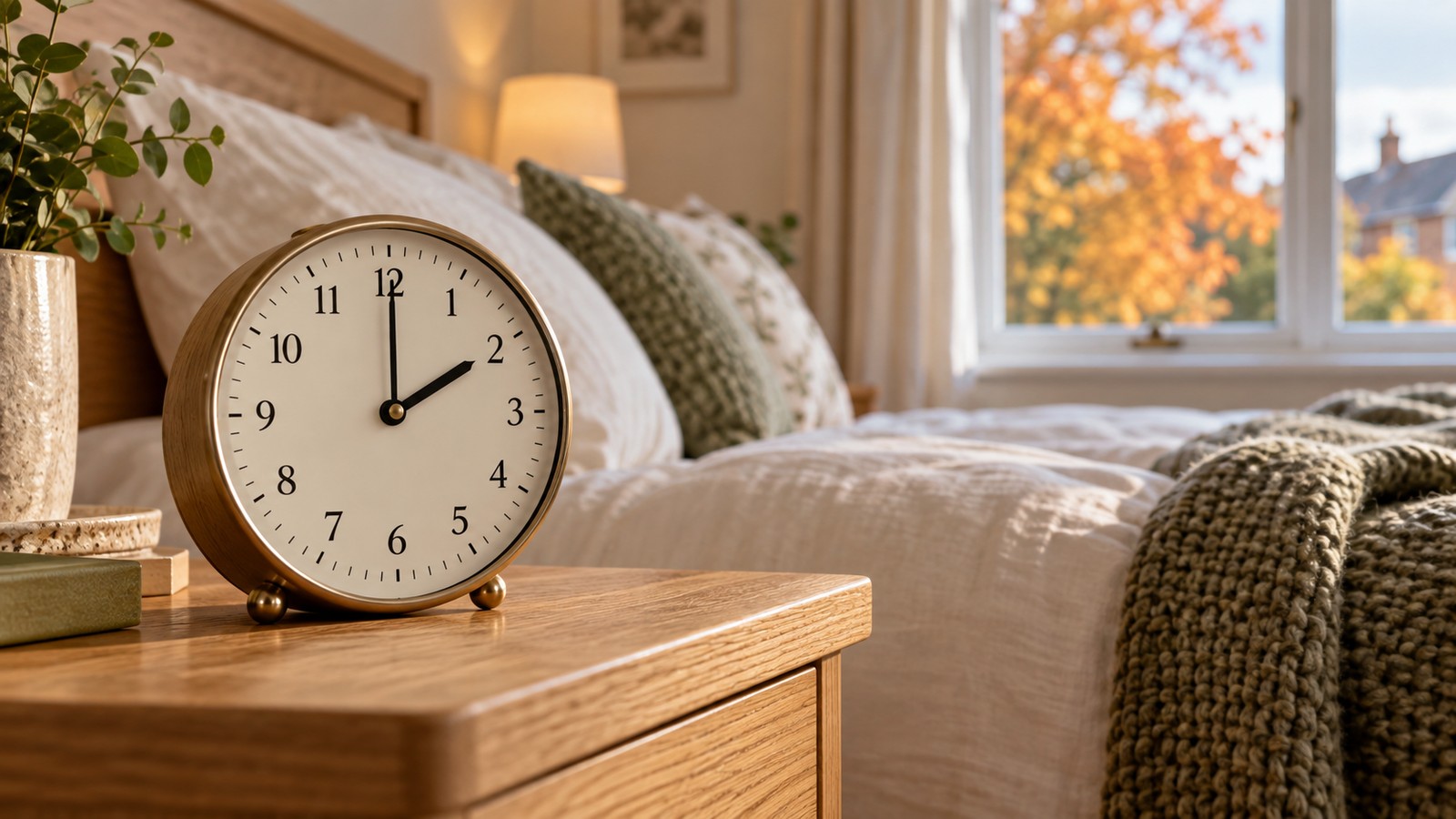
UK clocks will go back on Sunday, 25 October 2026, marking the end of British Summer Time and the return to Greenwich Mean Time.
At 2am, the clocks move back to 1am. For households preparing for October, the change is a useful reminder to check clocks, alarms and timed routines before the final weekend of the month.
It also means sunset will appear an hour earlier by the clock than it would without the change. The adjustment does not remove an hour of daylight; it changes how daylight lines up with the time displayed.
When Do the Clocks Go Back This October?
The date is confirmed in the official GOV.UK clock-change calendar.
| Detail | October 2026 clock change |
|---|---|
| Date | Sunday, 25 October |
| Time of change | 2am |
| Direction | Back one hour |
| Clock display | 2am becomes 1am |
| Time zone afterwards | Greenwich Mean Time |
The change happens overnight between Saturday, 24 October and Sunday, 25 October.
If you adjust a manual clock before going to bed on Saturday, move it back by one hour.
Why Does the Date Change Each Year?
The UK autumn change takes place on the last Sunday in October, rather than on a fixed calendar date.
That is why it falls on 25 October in 2026 and 31 October in 2027. The October 2026 change follows the usual rule; it is not a separate or exceptional adjustment.
Does the Whole UK Change Together?
Yes. England, Scotland, Wales and Northern Ireland follow the same autumn clock change.
Anyone arranging a call or journey involving another country should check the relevant local time. Other places may change their clocks on different dates or keep the same time throughout the year.
Which Clocks Should You Check?
Do not assume every device in the home will update in the same way. Make a short list of anything that displays the time or runs to a schedule.
Phones, Computers and Connected Devices
Check whether automatic date, time and time-zone settings are enabled. If a device updates itself, avoid making an additional manual adjustment.
For an important Sunday alarm, confirm the displayed time and alarm settings after the change.
Manual Clocks and Household Appliances
Wall clocks, watches and appliance displays may need attention. Check the instructions for anything unfamiliar rather than guessing how its settings work.
A practical household checklist includes:
- Wall clocks and bedside alarms
- Watches
- Cooker and microwave displays
- Car dashboard clocks
- Heating programmers
- Outdoor-lighting timers
A clock display and a programmed schedule may have separate settings, so check both where applicable.
Use the Weekend to Review Everyday Routines
The clock change can be an organisational prompt without becoming a major household project.
Check Sunday plans, prepare anything needed for Monday morning and make sure shared calendars are clear. If someone else in the household relies on a manual alarm, include it in the checks.
For readers whose routine has already drifted later, Lifeinism’s guide to fixing a sleep schedule after summer explores gradual changes and consistent daily habits.
There is no need to buy a new device or overhaul the bedroom simply because the clocks are changing.
Check Heating and Lighting Schedules
A heating programmer or lighting timer deserves a separate check if it controls when equipment switches on.
Read the display and review the scheduled times. A timer showing the wrong hour could run at a different point in the household’s day than intended.
The same weekend can also be used to note seasonal maintenance tasks that are still outstanding. Lifeinism’s autumn home maintenance checklist provides a broader plan for preparing the property.
Keep these checks manageable: confirm the settings, record any problems and arrange specialist help for work beyond routine adjustments.
What If You Are Travelling or Working Overnight?
If plans cross the clock-change period, check the booking or rota carefully.
For overnight work, ask the employer how the shift is being scheduled. For travel, use the operator’s confirmed itinerary and check the local time at departure and arrival.
The repeated hour can make an informal reference such as “half past one” unclear. Confirm the intended time directly when the distinction matters.
A Simple Reminder for October
Put a reminder in the household calendar for Saturday, 24 October to check manual clocks and timers.
For wider seasonal ideas, explore Lifeinism’s latest lifestyle coverage.