


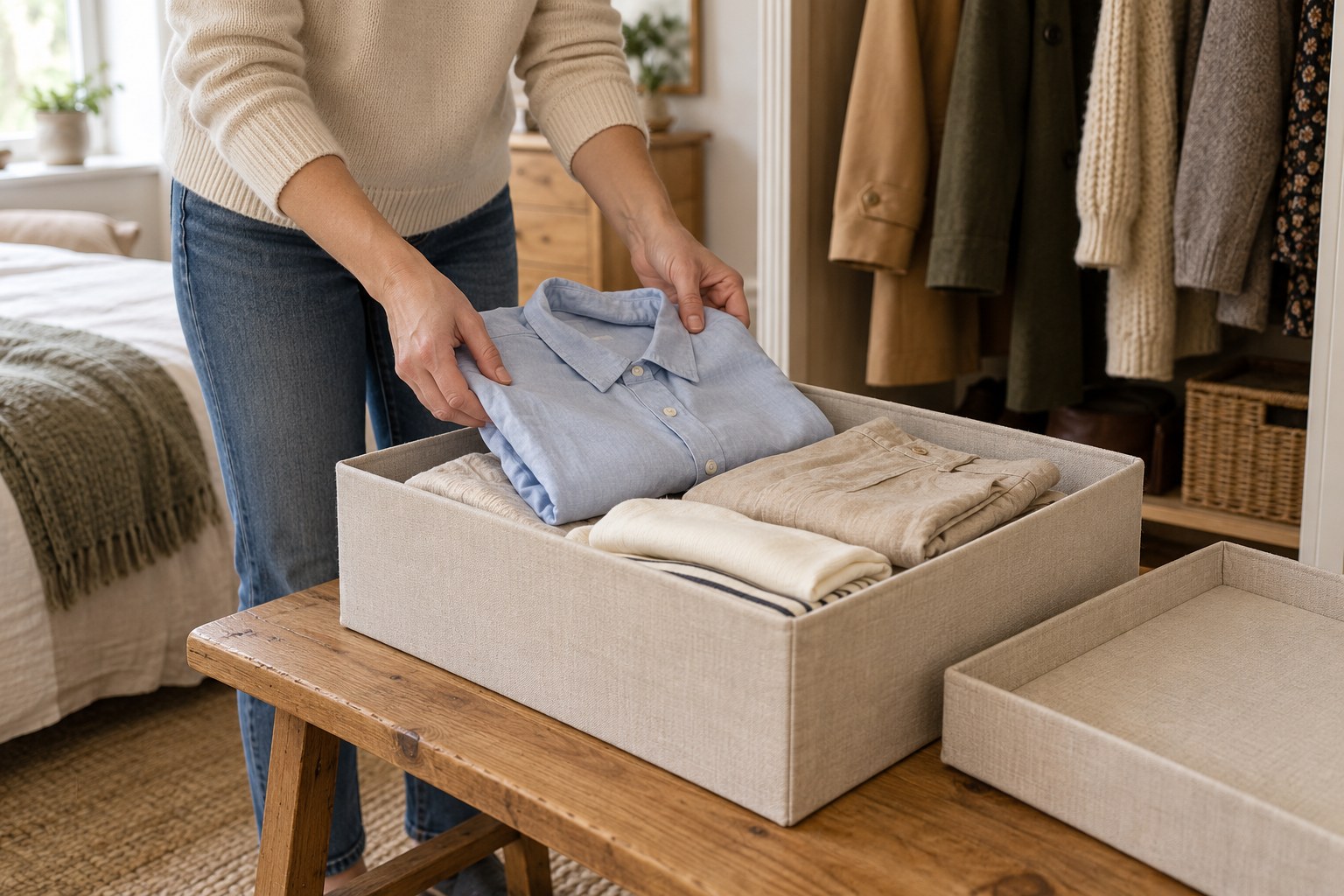
Knowing how to store summer clothes properly can save an unpleasant job next spring. Opening a box of clean, neatly folded clothing is one thing. Finding a damp smell, forgotten stains and crushed summer dresses is another.
The difference usually comes down to preparation. Clothing needs to be clean and completely dry, the container needs to suit its contents, and the storage space needs to stay dry.
Before packing everything away, keep a few useful layers within reach. A cotton T-shirt or lightweight cardigan may still earn its place in your winter wardrobe.
How to Store Summer Clothes: The Basic Steps
Work through one drawer or clothing category at a time:
- Separate seasonal pieces from clothes you still wear.
- Check pockets, stains, loose buttons and damaged seams.
- Clean garments according to their care labels.
- Allow everything to dry completely.
- Choose suitable containers and a dry storage location.
- Label each container and check its contents periodically.
Textile conservation guidance supports storing clean, dry textiles in a cool, dark, dry location with suitable ventilation. Household clothing does not need museum-level packing, but those basic principles are useful. Canada.ca
Decide What Actually Needs Packing Away
Not every lightweight item belongs in seasonal storage.
Keep the pieces you wear under jumpers, to the gym or around the house. Set aside clothing needed for an upcoming holiday, too. Otherwise, you may end up pulling apart a carefully packed box a fortnight later.
Focus on items you are unlikely to use for several months: beachwear, holiday dresses, lightweight shorts and other distinctly warm-weather clothing.
If the wardrobe is already crowded, start with our guide to decluttering your wardrobe before winter. There is little benefit in finding storage space for clothes you have already decided not to keep.
Clean Clothes Before Putting Them into Storage
A top worn briefly may look clean, but check the neckline, underarms and cuffs before packing it.
Follow the care label rather than putting every summer garment through the same wash. Delicate trims, structured pieces and dry-clean-only clothing may need different treatment.
English Heritage advises cleaning clothing before storage and checking folds, creases and the areas behind labels for signs of clothes moths. English Heritage
Deal with stains before packing. If you are unsure about a fabric, seek suitable cleaning advice rather than experimenting just before putting it away for months.
This is also a sensible time to sew on a loose button or repair a small seam. Store the garment ready to wear, rather than leaving next season’s version of yourself a repair pile.
Make Sure Everything Is Completely Dry
When considering how to store summer clothes, drying deserves as much attention as washing.
Check thicker sections such as waistbands, pockets, collars and lined areas. They can feel different from the thinner fabric around them.
Do not pack something simply because you need to clear the airer. If an item still feels damp, give it more drying time.
For practical drying arrangements during colder weather, see our guide to drying clothes indoors in winter.
Check the container itself, too. A box recently wiped clean needs to dry before clothing goes inside.
Choose Storage That Suits the Clothes and the Space
Start with containers you already own. Check that they are clean, dry, undamaged and large enough to hold clothing without forcing the lid.
| Storage option | What to consider |
|---|---|
| Lidded storage box | Useful for organising folded clothing; check the lid fits and contents stay dry |
| Fabric storage bag | Easy to fit onto a shelf, but protection depends on its construction and closure |
| Under-bed container | Convenient where the space is dry and accessible for checks |
| Garment bag | Consider for pieces that need hanging; choose a suitable hanger and cover |
| Vacuum bag | Check garment and bag instructions before compressing clothing |
A storage product cannot make a damp location suitable. Decide where the clothes will live before choosing a container.
Should You Use Vacuum Bags?
Vacuum bags can reduce bulk, but do not assume every garment is suitable for compression.
Check the instructions for both the clothing and the bag. Be particularly careful with structured, embellished or delicate pieces.
Avoid compressing something simply because it fits. If you are uncertain, use a less restrictive storage method or ask the garment manufacturer for advice.
Fold Clothes Without Overfilling the Container
Leave enough space to place garments inside without pushing down hard on the pile.
Group similar items together so you can find them later. Holiday clothing might share one box, while everyday summer tops go in another.
Make sure zips, hooks and decorative details are positioned so they are less likely to catch neighbouring fabric. Keep unusually delicate pieces separate where appropriate.
Before packing knitwear or other fuzzy fabrics, inspect their condition. Our guide to stopping clothes bobbling covers care habits worth reviewing before the next season.
Find a Dry Place to Store Summer Clothes
The best place is somewhere you can keep dry and inspect without a major effort.
An indoor cupboard or bedroom storage area may be more practical than an outbuilding with changing conditions. Check the actual space rather than judging it by appearance alone.
Look for condensation, water marks or a recurring damp smell. Do not hide clothing against a damp wall and expect the box to solve the underlying problem.
The Canadian Conservation Institute’s textile-care guidance provides more detail on the importance of clean, dry storage conditions.
Label Boxes So You Can Find Things Again
“Summer clothes” is useful. “Summer work tops and linen trousers” is better.
Write a short description on the outside of each container. If several people share the storage space, add a name.
A quick photograph of the contents can help, especially if you are packing several similar boxes. Keep the system simple enough that you will actually use it.
Put anything you may need sooner near the top. Holiday plans change, and an unexpected warm weekend should not require emptying every container.
Check Stored Clothing During Winter
Once you have worked out how to store summer clothes, do not forget about them until spring.
Check periodically, particularly if the storage area develops condensation or the room has had a leak. Look for moisture, unusual smells and signs of insect activity.
If clothing smells musty, take it out and investigate the garments, container and storage space. Adding fragrance will not address trapped moisture or damp surroundings.
If you suspect clothes moths, separate affected items and seek appropriate identification and treatment advice before returning them to storage.
Frequently Asked Questions
Should I wash summer clothes before storing them?
Clean them according to their care labels before long-term storage. Inspect items even if they have only been worn briefly, then make sure they are completely dry.
Can I store summer clothes under the bed?
Yes, provided the space is dry and the container is suitable. Keep it accessible enough to inspect and clean around.
Why do stored clothes smell musty?
Possible causes include clothing packed before fully drying, moisture inside the container or damp storage conditions. Check all three rather than covering the smell.
Should I put all my summer clothes away?
Keep useful layering pieces and anything needed for travel within reach. Pack clothing according to how you use it, rather than the season printed on a checklist.
What is the easiest way to organise seasonal clothing?
Use manageable groups, avoid overfilling containers and label them clearly. A simple system makes it easier to unpack, inspect and wear the clothes again.
Taking time to prepare clothing now makes the next wardrobe change easier. Clean what needs cleaning, finish the small repairs and choose somewhere dry. The aim is to open the box next season and find clothes you can use.