


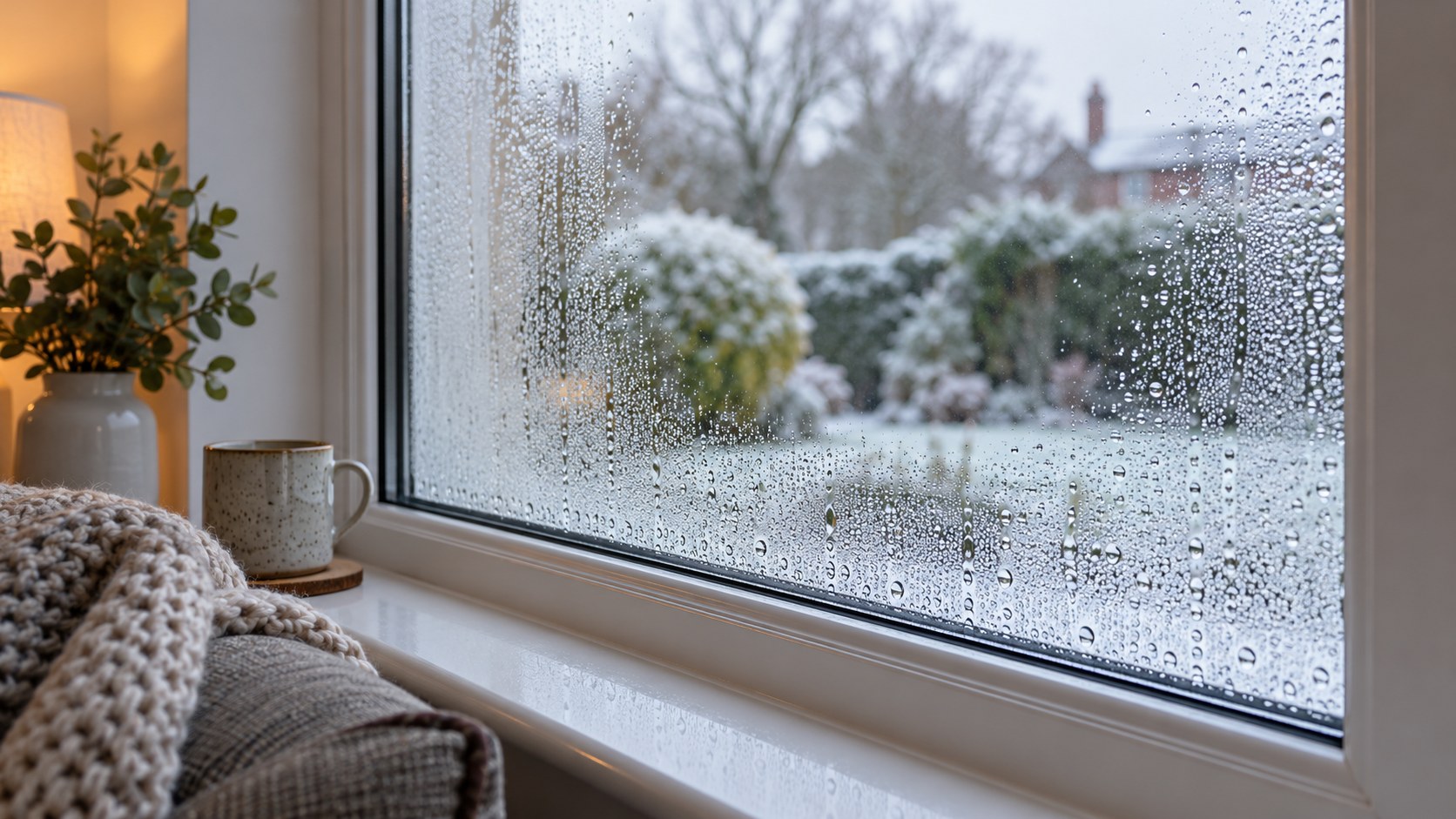
Waking up to water on the inside of your windows can be frustrating, especially when it happens every morning. If you are wondering how to stop condensation on windows in winter, start by looking at where moisture comes from and how easily it can leave your home.
Cooking, showering and drying clothes indoors all add moisture to the air. When that moist air meets cold window glass, it turns into water droplets. A little condensation can happen, but if windows remain wet for long periods, the surrounding frames and walls may also become damp.
A few changes to your daily routine can help reduce the problem. The important thing is to address the moisture as well as wipe away the water you can see.
Why Do Windows Get Condensation in Winter?
Condensation forms when warm, moist air comes into contact with a colder surface. In winter, windows are often colder than the air inside your home, making them a common place for water droplets to appear.
You may notice it first thing in the morning in bedrooms, after cooking in the kitchen or following a hot shower. That does not automatically mean there is a fault with the window, but regular heavy condensation is worth investigating.
Other signs of a moisture problem include a musty smell, damp window frames and mould around windows or in corners. Damp can have several causes, including condensation, leaks and water entering from outside.
How to Stop Condensation on Windows in Winter
There is no single solution that works for every home. However, reducing excess moisture and improving ventilation are useful places to start.
1. Use Extractor Fans When Cooking and Showering
Kitchens and bathrooms produce a lot of moisture. Using an extractor fan while cooking or showering helps move damp air outside.
If you do not have an extractor fan, open a window where practical. Energy Saving Trust recommends keeping the fan on or window open for around 15 minutes after you finish to help clear the remaining moisture.
If your extractor fan does not seem to be working properly, arrange for it to be checked. In a rented home, report the problem to your landlord or letting agent.
2. Keep Window Vents Open
Some windows have small openings called trickle vents. These allow a controlled flow of fresh air into the room, even when the window itself is closed.
It can be tempting to shut or cover them during cold weather, but ventilation helps moisture escape. Keeping the vents open can help air circulate without leaving the entire window open.
Never block fixed ventilation openings required for gas appliances. If you are unsure which vents are needed, ask a qualified professional before making changes.
3. Be Careful When Drying Clothes Indoors
A full load of wet washing releases moisture as it dries. In a small or poorly ventilated room, that moisture can contribute to condensation.
When outdoor drying is not possible, spread clothes out on an airer and use a room with suitable ventilation. Avoid placing wet clothes throughout the house if you can keep them in one ventilated space.
For more practical advice, read our guide on how to dry clothes indoors in winter.
4. Wipe Away Water From Windows
If you find water on the glass in the morning, wipe it away with a cloth. Dry the window frame and sill as well, particularly if water has collected along the bottom.
This helps prevent water from sitting on the surface, but it does not solve the cause on its own. If the windows become wet again every day, look at ventilation, indoor moisture and any signs of leaks.
Keep the cloth somewhere it can dry after use rather than leaving it damp on the windowsill.
5. Reduce Moisture While Cooking
Small cooking habits can make a difference. Put lids on pans where suitable and use the extractor fan while preparing food.
If the kitchen has a door, closing it while you cook can help limit the spread of moist air to other rooms. Afterwards, keep the extractor running or ventilate the room to help remove the remaining moisture.
You do not need to avoid cooking your usual meals. The aim is to give the extra moisture a way out.
6. Keep Your Home Warm Where Possible
Cold surfaces make condensation more likely, so keeping the rooms you use comfortably warm can help alongside ventilation.
Heating needs and budgets vary from household to household. If you are concerned about winter energy costs, start by checking your heating controls and seeking support from your energy supplier if needed.
Avoid treating heating as a replacement for ventilation. Both play a part in managing moisture.
Our autumn home maintenance checklist has more ideas for preparing your home for colder weather.
7. Check for Other Causes of Damp
Not all damp patches are caused by condensation. A leaking pipe, damaged gutter or water entering from outside can also leave walls and window areas wet.
Pay attention to where the problem appears. For example, a patch that grows after rainfall or dampness around a leaking pipe needs further investigation.
If you rent, take photographs and report recurring damp, mould or leaks to your landlord or letting agent. If you own your home and cannot identify the cause, consider getting a suitably qualified professional to inspect it.
How to Stop Condensation on Windows in Winter When Drying Clothes
Laundry can make a room feel more humid, particularly if several loads are drying at once. If outdoor drying is not possible, choose one suitable room and make sure it has ventilation.
Leave space between items on the airer rather than piling clothes together. Follow garment care labels when choosing a spin cycle, and avoid blocking heaters or vents with the drying rack.
If condensation appears while clothes are drying, wipe the window and review how the room is ventilated. You can also use Lifeinism’s guide to drying clothes indoors in winter for more tips.
What About Condensation Between Double-Glazed Windows?
Water between the panes is different from water on the inside surface of a window. If moisture appears inside the sealed space between double-glazed panes, the window unit may need professional attention.
Improving ventilation can help with condensation on the room-facing surface, but it will not dry moisture trapped inside a sealed unit. Ask a window specialist to inspect it and explain the repair or replacement options.
Should You Use a Dehumidifier?
A dehumidifier can help remove moisture from indoor air, but whether it is useful depends on the room, the size of the problem and the cost of running the device.
If you choose to use one, follow the manufacturer’s instructions and empty or drain it as directed. Check its electricity use when working out whether it fits your budget.
A dehumidifier should not be used to ignore a leak, a faulty extractor fan or another underlying problem. If damp keeps returning, investigate the cause.
A Morning Routine to Reduce Window Condensation
If you are learning how to stop condensation on windows in winter, start by checking the rooms where the problem appears most often. A short morning routine can help you spot changes and prevent water from sitting on the window frame.
- Check the window: Look for water on the glass, frame and sill.
- Wipe it dry: Remove standing moisture with a cloth.
- Ventilate the room: Use the available vents or open a window where practical.
- Look for patterns: Notice whether the problem is worse after drying clothes or on particularly cold mornings.
- Report persistent damp: Take photos and ask for an inspection if the issue continues.
This routine can help you spot a problem early, but it is not a substitute for fixing leaks or damaged ventilation.
Where to Find More Advice
If you want to understand the causes of damp and condensation in more detail, Energy Saving Trust’s guide to fixing damp and condensation explains the signs to look for and ways to improve ventilation.
For other household routines, our 15-minute evening reset guide can help you keep everyday spaces organised.
Frequently Asked Questions
What causes condensation on windows in winter?
Condensation forms when moist indoor air meets cold window glass. Cooking, showering, breathing and drying clothes can all add moisture to the air.
How do I stop condensation on windows in winter?
Use extractor fans when cooking and showering, keep suitable vents open, manage moisture from indoor laundry and wipe water from windows. If the problem persists, check for leaks or ventilation faults.
Is condensation on windows a sign of a problem?
A small amount can occur, especially on cold mornings. However, heavy or persistent condensation, mould, wet frames or a musty smell should be investigated.
Should I open windows in winter to reduce condensation?
Ventilation can help moist air escape, including during winter. Open windows when practical, particularly during and after activities such as cooking or showering, and use extractor fans where available.
Why is there water between my double-glazed panes?
Moisture trapped between panes may indicate a problem with the sealed window unit. A window specialist can inspect it and recommend suitable repair or replacement options.
Can drying clothes indoors cause condensation?
It can contribute to condensation because wet clothes release moisture into the air. Use a ventilated space and spread items out so they can dry.
What should I do if mould keeps coming back?
Report the issue to your landlord if you rent, or arrange an inspection if you own the property. Recurring mould may indicate an ongoing moisture or repair problem that needs attention.