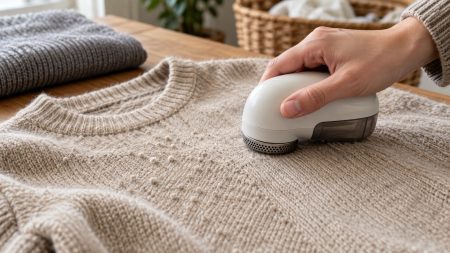



Learning how to prevent clothes moths starts with regular checks, clean clothing and suitable storage. A jumper left untouched at the back of a wardrobe can be easy to overlook until you discover small holes or damaged patches.
However, a hole alone does not prove that moths are responsible. Wear, snagging and other textile pests can also damage clothes. Before buying treatments, inspect the garment and its surroundings.
The aim is to spot problems early and make clothing easier to inspect, rather than relying on scented products to protect an entire wardrobe.
What Causes Clothes Moth Damage?
The Natural History Museum explains that clothes moth larvae cause damage to natural fibres. Adult clothes moths do not eat your jumpers.
Susceptible materials include wool clothing, upholstery and carpets. The museum also notes that clothes moths favour low-light conditions and soiled fabrics. Natural History Museum
This makes neglected storage areas worth checking, particularly where clothing remains undisturbed for long periods.
How to Prevent Clothes Moths: Start With an Inspection
Take clothing out in manageable sections. Start with wool jumpers, scarves and other natural-fibre garments that have not been worn recently.
Check the fabric carefully, including folds, creases and areas behind labels. English Heritage identifies these as places to inspect for signs of clothes moths. English Heritage
Look for:
- New holes or thinning areas.
- Silky webbing around fabric.
- Small cases attached to clothing or nearby surfaces.
- Larvae or repeated sightings of small moths near stored textiles.
Photograph anything unusual before cleaning. This can help a pest professional identify the problem if you need assistance.
If the wardrobe is too crowded to inspect properly, begin with our guide to decluttering your wardrobe before winter.
Clean Clothing Before Long-Term Storage
A garment that looks clean may still need attention before spending several months in a box.
Check necklines, cuffs and underarms. Follow the care label when deciding whether to wash, dry-clean or seek specialist advice.
Do not put every garment through a hot wash as a precaution. Wool, delicate fabrics, trims and structured clothing may need different care.
Once cleaned, let items dry completely before packing. For a fuller preparation checklist, read our guide to storing summer clothes for winter without musty smells.
Keep Wardrobe Shelves and Edges Clean
Remove clothes before cleaning shelves and the wardrobe floor. Pay attention to corners, edges and areas where dust or fibres gather.
Vacuum accessible crevices using a suitable attachment. English Heritage recommends regular vacuuming around wardrobe bases, edges and shelves. It also advises sealing vacuum waste and disposing of it in an outside bin afterwards. English Heritage
Take this opportunity to check nearby textiles. A problem affecting clothing may also involve a rug or upholstered item rather than the wardrobe alone.
How to Prevent Clothes Moths During Storage
Use clean, dry containers with secure closures for suitable garments. Inspect clothes before packing them, because a sealed container will not solve a problem already inside.
The Natural History Museum recommends airtight bags and containers as a way to prevent infestation of stored clothing. Natural History Museum
Choose storage that allows you to retrieve and inspect items easily. Label boxes clearly and avoid placing your most delicate knitwear beneath a heavy pile of other belongings.
For clothes that stay hanging, periodically take them out and check them. Disturbing and inspecting stored garments is more useful than leaving them untouched until next season.
Do Lavender Sachets Stop Clothes Moths?
Lavender sachets should not be treated as a complete solution.
English Heritage notes that lavender products are not effective against larvae. Adding a scented sachet therefore does not replace inspection, cleaning or appropriate treatment of affected items. English Heritage
Similarly, catching adult moths does not establish that all eggs or larvae have been removed. Use monitoring products according to their instructions and investigate continuing signs of damage.
Check Second-Hand Clothes Before Adding Them
Before putting a second-hand coat or jumper into your wardrobe, inspect it carefully and follow suitable cleaning instructions.
Pay attention to seams, linings, folded sections and labels. This is also a useful opportunity to spot repairs or stains that need addressing.
Our guide to shopping for second-hand clothes in the UK explains other checks to make before buying.
What to Do if You Suspect an Infestation
Keep suspect garments separate while you identify the issue. Inspect surrounding clothing and nearby textiles, then choose a treatment compatible with the material.
Avoid improvising with heat, chemicals or freezer treatments without checking appropriate instructions. Valuable garments, delicate textiles and larger affected furnishings may need professional advice.
For identification, consult the Natural History Museum’s clothes moth guide.
If damage continues after cleaning, or several rooms are affected, contact a qualified pest professional to establish the source and suitable treatment.
Frequently Asked Questions
How Do You Know if Holes Are Caused by Clothes Moths?
Holes alone are not conclusive. Look for additional evidence, such as larvae, cases or webbing, and seek identification if you are unsure.
Do Adult Clothes Moths Eat Clothing?
No. The damaging stage is the larva, which feeds on susceptible natural fibres.
Can Clothes Moths Affect Carpets?
Yes. Suitable carpets and upholstered textiles can also be affected, so inspect beyond the wardrobe when investigating recurring damage.
Are Storage Bags Enough to Prevent Clothes Moths?
Secure storage can help, but inspect and clean clothing first. Bags cannot remove pests already present in a garment.
Should You Throw Away Every Affected Item?
Not automatically. Assess the damage and suitable treatment options first. Some garments may be treatable and repairable.