


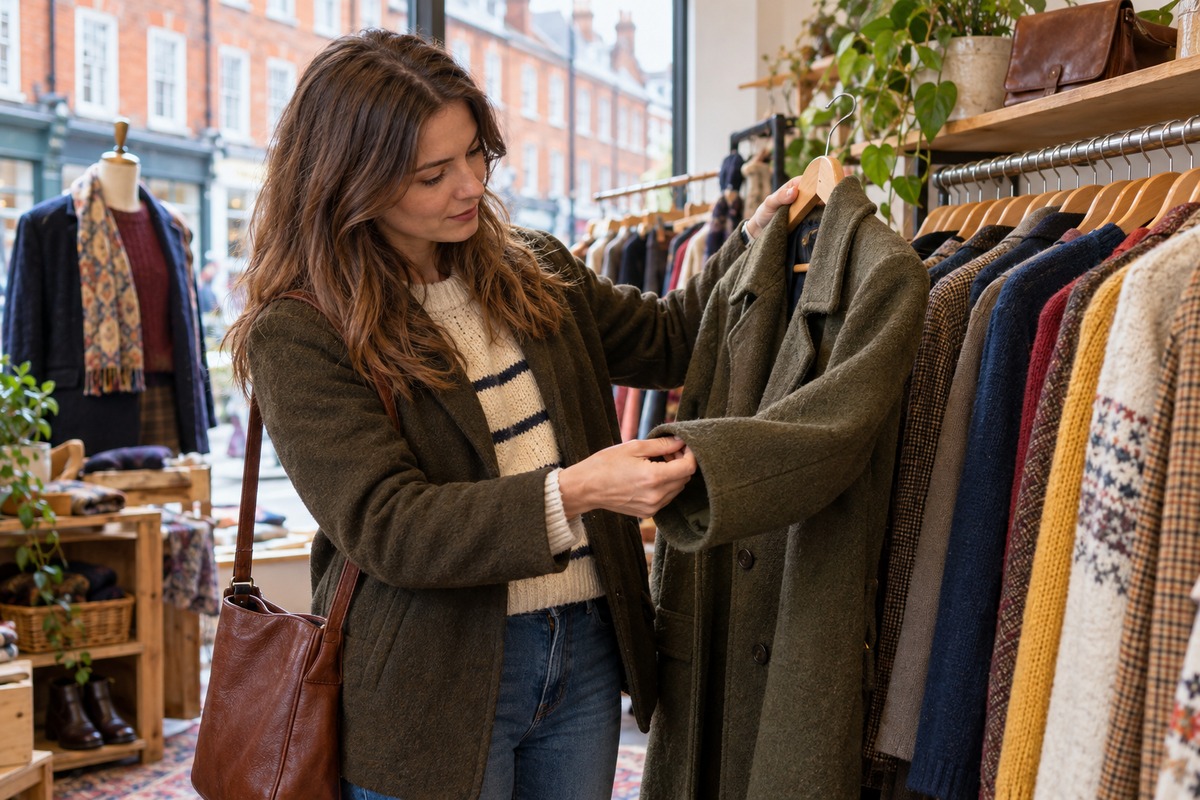
Quick answer: When buying second-hand clothes in the UK, start with a short shopping list, check the condition carefully and compare measurements rather than relying only on size labels. Include delivery, cleaning and repairs in your budget, and choose clothes that work with what you already own.
A good second-hand purchase feels satisfying for a simple reason: you have found something you like at a price you are comfortable paying. It might be a winter coat, a shirt for work or a pair of jeans that fits better than anything you tried on at the weekend.
But buying pre-owned clothing does not automatically mean saving money. A cheap item can still be a poor purchase if it needs expensive repairs, feels uncomfortable or never leaves your wardrobe.
There are several ways to shop for second-hand clothes in the UK, from charity shops and vintage stores to online resale listings. The challenge is knowing what deserves a closer look and what is better left behind.
1. Check Your Wardrobe Before You Start Shopping
Before visiting a shop or scrolling through listings, look at the clothes you already own.
You may discover that you need one practical layer rather than several new outfits. Perhaps your favourite trousers need a suitable jumper, or your everyday coat no longer leaves enough room for winter layers.
Write down the gaps you want to fill. Keep the list specific enough to guide you but flexible enough to allow different colours or styles.
“Comfortable trousers for work” is more useful than “something nice”. It gives you a reason to assess the fit, fabric and suitability before getting distracted by a low price.
Think about what you actually wear during a normal week. Clothes for your real routine usually offer better value than pieces bought for an occasion that may never happen.
2. Explore Different Places to Buy Second-Hand Clothes in the UK
Different shopping routes offer different experiences.
Charity shops let you inspect garments in person and may give you the opportunity to try them on. Stock varies between branches and visits, so you will not always find the item you had in mind.
Vintage shops can be useful when you want a particular style or period. However, an item being older does not automatically mean it is better made or reasonably priced.
Online resale listings offer a wider search area, but you must rely on photographs, descriptions and measurements. A low listing price can become less attractive once delivery and other charges are added.
For local browsing, the Charity Retail Association’s shop finder lets you search for member charity shops by location.
Choose the route that suits your priorities. Trying on a coat in person may matter more than finding the widest possible selection.
3. Inspect the Areas That Show Wear First
A garment can look excellent on a hanger while showing wear in less obvious places.
Check collars, cuffs, underarms and hems. On trousers, inspect the waistband, pockets, inner thighs and seat. These areas can reveal thinning fabric, staining or stretched seams.
Test zips gently and check that buttons are present. Look at the lining of jackets and coats, particularly around the armholes and pockets.
For knitwear, examine the elbows, neckline and cuffs. Some surface bobbling may be manageable, but holes, distorted fabric or heavy wear need more consideration.
Hold the garment in good light where possible. Ask yourself whether you would still want it if the price label were covered. That helps separate a useful purchase from the excitement of a bargain.
4. Use Measurements Rather Than Trusting Size Labels
Size labels are a starting point, not a guarantee.
Fit can vary between brands, garment styles and periods of manufacture. Previous washing or alterations may also have changed the original shape.
When shopping in person, try the item on if facilities are available. Sit down, move your arms and check whether it feels comfortable during normal movement.
For online purchases, compare the seller’s measurements with a similar garment you already own. Useful details might include the chest width, shoulder width, sleeve length, waist and inside leg.
Check how the measurements were taken. A waistband measured flat across the front is different from a full waist circumference.
If essential information is missing, ask before buying. Guessing is rarely a good way to shop for second-hand clothes in the UK, especially when returns may be inconvenient or unavailable.
5. Read the Fabric and Care Labels
The care label tells you something about the work involved in owning the item.
A coat requiring specialist cleaning may still be worthwhile, but its purchase price is only part of the cost. A delicate blouse may be unsuitable if you want something that can go into your usual wash.
Look at the fibre composition where the label is available. Consider how the garment feels, whether the fabric has enough stretch for your needs and whether it suits the season.
Check for signs that previous care has affected the item. A shrunken jumper, twisted seam or misshapen lining can be difficult to put right.
If the care label is missing, consider whether you are comfortable looking after the garment without clear instructions. Do not assume that every stain or smell will disappear after washing.
6. Work Out the Full Cost Before Paying
A £10 item is not necessarily a £10 purchase.
Delivery, cleaning, replacement buttons or alterations may add to the total. Some repairs are straightforward, while others require a professional assessment.
Before buying something that needs work, decide whether you can do the repair yourself or obtain a realistic quote. Avoid assuming that changing the fit will be simple.
For example, shortening a plain trouser hem is a different job from restructuring a lined jacket. The price and practicality will depend on the garment.
A useful rule is to compare the total expected cost with your budget and likely use. An inexpensive item that needs several jobs may offer less value than a slightly dearer piece you can wear immediately.
7. Read Online Listings Carefully
Photographs can leave important questions unanswered.
Look for clear images of the front, back, labels and any disclosed flaws. If the colour appears different between photographs, ask which image is closest to the actual garment.
Descriptions such as “good condition” mean different things to different sellers. Ask specific questions about staining, holes, repairs or missing fastenings when those details matter.
Review the platform’s current payment, buyer protection and dispute arrangements before using it. Check the listing’s return information rather than assuming every seller offers the same terms.
Keep your questions and purchase records within the platform’s supported process. Take time over a purchase if you feel pressured to decide before you have the information you need.
8. Choose Pieces That Work With Your Existing Clothes
One of the simplest ways to avoid wasted spending is to picture the item in an outfit you can already make.
Can you wear the jumper with your usual jeans? Does the jacket suit your everyday shoes? Will the shirt work under a coat you own?
You do not need every purchase to match everything. However, a garment that requires several more purchases before you can wear it deserves a second thought.
Keep your preferences in mind rather than copying every trend you see. A familiar colour, comfortable cut or useful layer can be a better addition than a statement piece you do not feel at ease wearing.
For more everyday style inspiration, explore Lifeinism’s fashion section.
9. Give Yourself Permission to Leave Without Buying
Second-hand shopping can encourage quick decisions because an item may be unique or unavailable on your next visit.
That does not mean you have to buy it.
If the fit is wrong, the condition concerns you or the price exceeds your budget, leaving it behind is a sensible outcome. You have avoided spending money on something that does not meet your needs.
Set a spending limit before you browse. Take a break when you notice that you are choosing items mainly because they seem cheap.
The best approach to buying second-hand clothes in the UK is patient rather than competitive. Finding nothing on one visit does not make the trip unsuccessful.
10. Care for What You Bring Home
Once you have bought an item, inspect it again and follow the care instructions before wearing it.
Avoid washing everything on the same setting. Different fabrics and constructions may need different treatment.
Store clothing in a way that supports its shape. Deal with a loose button or small seam issue before it becomes a bigger problem.
The value of a purchase comes from using it. Keep your new finds visible and include them in your usual outfits rather than saving them indefinitely.
For broader practical features and everyday ideas, browse Lifeinism’s lifestyle coverage.
Frequently Asked Questions
Are Second-Hand Clothes Always Cheaper Than New Clothes?
No. Prices vary by seller, brand, condition and demand. Compare the full cost, including delivery, cleaning and repairs, before deciding whether an item offers good value.
What Should I Check Before Buying Used Clothing?
Check the fit, fabric, seams, fastenings and areas that commonly show wear. Read the care label and consider any disclosed damage before paying.
How Can I Check the Fit When Shopping Online?
Compare the seller’s measurements with a similar garment that fits you well. Ask for missing measurements and confirm how they were taken.
Is It Worth Buying Clothes That Need Repairs?
Sometimes, provided the repair is realistic and the total cost remains worthwhile. Get advice before buying an item that needs substantial alterations or specialist work.
Where Can I Find Charity Shops Near Me?
Use a charity shop’s own website or the Charity Retail Association’s shop finder. Check individual opening hours before making a special journey.
How Can I Avoid Impulse Purchases?
Shop with a short list, set a budget and think about how each item fits into your existing wardrobe. Leave it behind if the main attraction is simply the low price.
Buy for Your Wardrobe, Not Just for the Bargain
Second-hand shopping works best when you know what you need and take time to assess what you find.
A good purchase should fit your body, your routine and your budget. It should also be something you want to wear, rather than something you feel obliged to buy because it appears to be a deal.
Explore more fashion, lifestyle and everyday features on Lifeinism.