


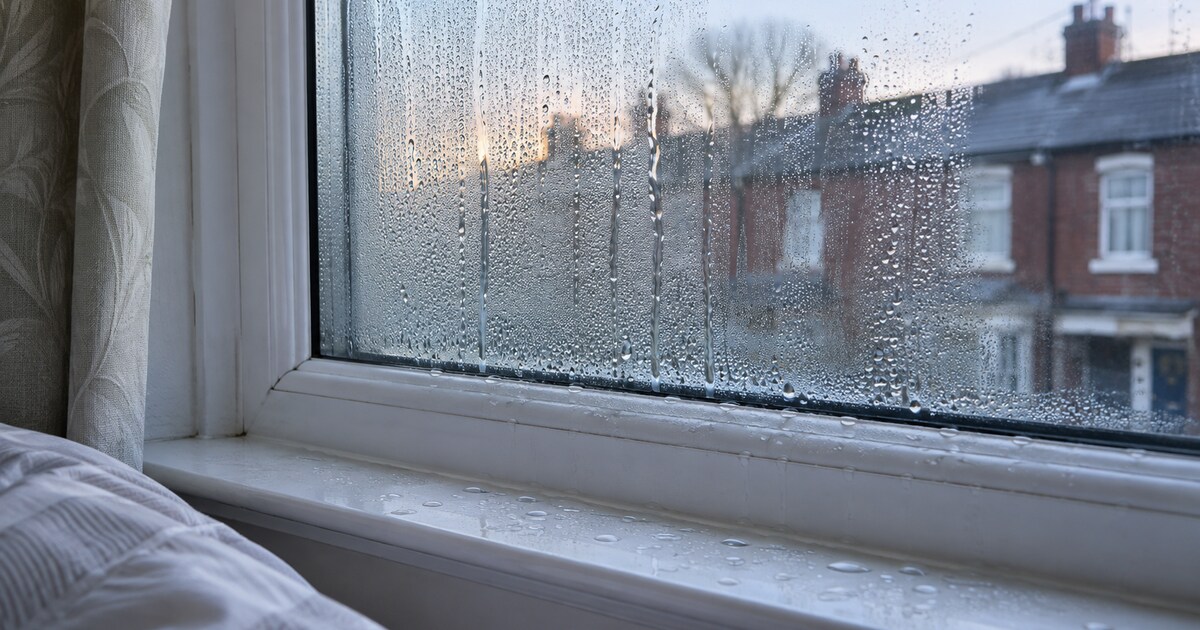
Condensation on bedroom windows usually forms overnight when moist indoor air meets cold glass. If you can wipe the droplets away from inside the room, start by drying the glass and sill and checking the room’s ventilation. If the mist stays after you wipe both accessible surfaces, the moisture may be between the panes and the sealed glazing unit may need checking.
Before changing how you heat or ventilate the bedroom, look at exactly where the water appears. A misty pane, a wet sill and a damp patch beside the frame can each point to a different problem. Energy Saving Trust guidance on windows and doors
Why Do Bedroom Windows Get Wet Overnight?
You release moisture into the air as you breathe. In a bedroom with limited ventilation, that moisture can build up overnight. When the air next to the glass cools enough, water droplets form. They may run down the glass and collect along the bottom of the window or on the sill by morning.
Drying laundry in the bedroom adds moisture to the air. If you often leave a clothes airer in the room overnight, try moving it and see whether the window is drier on a similarly cold morning. Lifeinism’s guide to drying clothes indoors in winter
Is the Moisture Inside, Outside or Between the Panes?
| Where you see moisture | What it may mean | What to do next |
|---|---|---|
| On the glass facing the bedroom | Moist indoor air is condensing on cold glass. | Wipe the glass and sill dry, then check the room’s ventilation. |
| On the outside of the glass | The outer pane is cold enough for outdoor moisture to condense. This can happen with efficient glazing. | See whether it clears as outdoor conditions change during the morning. |
| Between the double-glazed panes | The seal on the glazing unit may have failed. | Ask a glazier to check whether the sealed unit can be replaced within the existing frame. |
| Around the frame or on the nearby wall, especially after rain | Water could be entering around the window opening. | Photograph the wet area and ask your landlord or a window installer to investigate. |
Energy Saving Trust guidance on glazing and ventilation
How to Reduce Condensation on Bedroom Windows in Winter
Dry the glass and sill each morning. Use an absorbent cloth to remove droplets and any water collected at the bottom of the frame. Take a photo first if you’re tracking where the moisture appears.
Check the trickle vents. If your windows have these small vents, keep them open so some air can move through while the window is shut. Look for a narrow slider or flap near the top of the frame.
Air the bedroom briefly after getting up. Where it’s safe and practical, open the window for a few minutes. If the bedroom windows still get wet, check whether other rooms have the same problem. That can help you decide whether to look more closely at this particular window or at moisture and ventilation across the home. Energy Saving Trust ventilation advice
For advice that also covers kitchens, bathrooms and other rooms, see Lifeinism’s guide to reducing window condensation in winter.
Try This Three-Morning Window Check
- Morning one. Photograph the window before wiping it. Note whether the droplets cover the glass or whether the water is concentrated in one corner. Check the sill and the wall beneath it.
- Morning two. Photograph the same window at roughly the same time. Note whether the vents were open, whether laundry was drying nearby and whether it rained overnight. Before the next check, open any fitted trickle vents and move wet laundry out of the bedroom.
- Morning three. Compare the photos. If there are fewer room-side droplets after the changes, keep observing on mornings with similar weather. If a damp patch spreads after rain, or the mist stays between the panes, share your photos when arranging an inspection.
Do You Need a Dehumidifier?
If condensation on bedroom windows is forming on the room-side glass, a dehumidifier can help lower moisture in the air. Start by checking the vents and whether wet laundry is adding moisture to the bedroom. Persistent mist between the panes calls for a glazing inspection. A damp patch around the frame that gets worse after rain is worth checking for water ingress. Energy Saving Trust guidance on windows and doors
What Should You Tell Your Landlord or Glazier?
If you rent and the window keeps getting wet, send dated photos to your landlord or letting agent. Include one photo of the whole window and a close-up of the affected area. Explain when the moisture appears and whether it’s on the glass, around the frame or on the nearby wall.
Hi, the inside of my bedroom window has been wet most mornings this week. Water collects along the bottom of the glass and on the sill. I’ve attached photos taken before wiping it dry. Could you arrange a check of the window and the room’s ventilation?
If you’re contacting a glazier about mist between the panes, tell them whether it stays visible throughout the day. Ask whether the sealed unit can be replaced while keeping the existing frame. Energy Saving Trust guidance on replacement glazing
.