


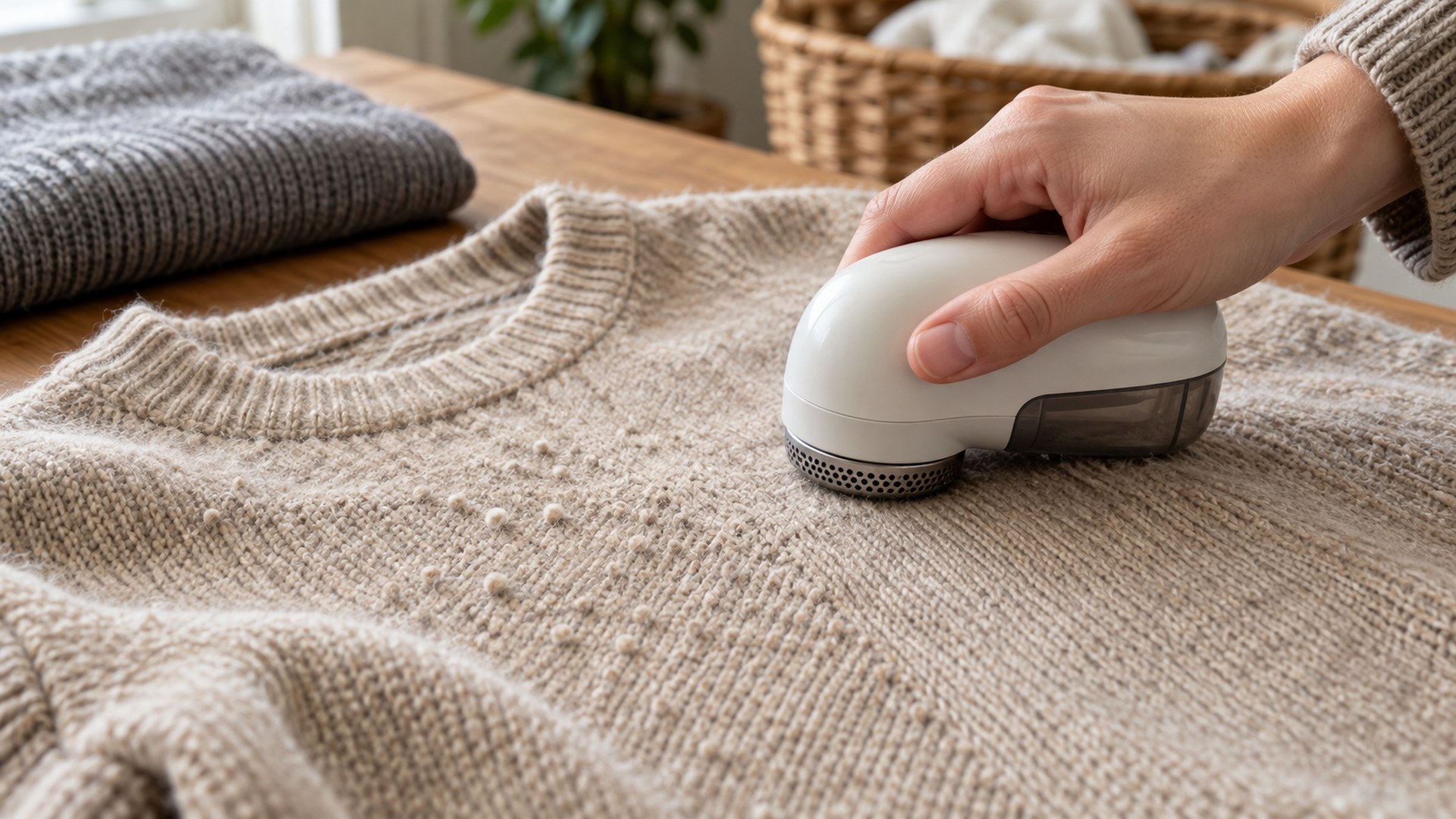
The jumper you wore last weekend comes out of the wash looking slightly scruffy. Small bobbles have appeared along the sleeves, and there is a fuzzy patch near the waist. You might wonder whether you washed it incorrectly or whether the fabric simply has not lasted well.
Those little balls are called pills. They form when fibres on the surface become tangled, often in places that experience repeated rubbing. You may notice them beneath the arms, around the elbows or where clothing comes into contact with other surfaces.
Before replacing the item, take a closer look. Surface bobbling and worn-through fabric are different problems, and an otherwise sound garment may only need careful attention.
Quick Answer: How Do You Stop Clothes Bobbling?
You can reduce bobbling by limiting unnecessary friction and following the garment’s washing and drying instructions. Turn suitable items inside out before washing, choose the recommended cycle and avoid tightly packed loads. Existing pills can sometimes be removed with an appropriate fabric comb or shaver, used gently after a small test.
No routine can guarantee that clothing will never pill. The fabric and the way you wear it both play a part.
Look at the Fabric Before Reaching for a Tool
Start with the garment on a clear surface in good daylight. Run your eyes over the affected area and check what is actually attached to it.
Loose fluff, pet hair and small fibres sitting on top are different from compact bobbles connected to the material. A long loop of thread is different again.
That distinction matters because the wrong treatment can turn a cosmetic problem into a hole.
| What you can see | What to do first |
|---|---|
| Loose fluff or hair | Try a suitable lint roller |
| Small, firmly attached bobbles | Assess whether a de-pilling tool suits the fabric |
| A pulled loop or loose thread | Keep it away from cutting tools and seek repair advice |
| Thin fabric or small holes | Deal with the damage before attempting surface grooming |
Check the surrounding fabric as well. If it already looks weak, removing more material may make its condition worse.
Why Bobbles Often Appear in the Same Places
Look at where the bobbling is concentrated.
If it sits beneath the arms, the sleeves may be rubbing against the body of the garment. If it follows the line of a bag strap, repeated contact could be contributing. A patch around an elbow may correspond with where you rest your arm while working.
These observations do not prove a single cause, but they can reveal a useful pattern.
Woolmark explains that pilling is influenced by several factors, including abrasion during wear. Its guide to pilling and clothing care describes common problem areas and methods for removing surface pills.
Rather than changing every part of your laundry routine at once, begin with the habits that relate to the wear you can see.
Make the Care Label Your Starting Point
Check the label before choosing a wash programme, detergent or drying method.
Two jumpers that look similar may need different treatment. One might allow machine washing, while another needs hand washing or professional cleaning.
Read the whole label, including the drying instructions. A low washing temperature alone does not tell you whether a garment can safely go into a tumble dryer.
If the instructions are missing or unclear, try the manufacturer’s website. For a delicate or expensive piece, getting advice is more sensible than testing an unfamiliar laundry trick.
Keep the Instructions Somewhere Useful
A quick photograph of the label can help if it later fades or becomes uncomfortable and needs removing.
Save it with a description you will recognise, such as “navy work cardigan”. That makes the information easier to find when several items have different care requirements.
Three Laundry Habits Worth Checking
You may be able to improve your routine without buying anything.
1. Prepare Clothes Before Loading
Turn suitable garments inside out to give the outer surface some protection from rubbing during washing.
Check pockets and exposed fastenings too. Follow the garment’s instructions for securing zips or other closures that could catch neighbouring items.
This preparation takes a moment when you are sorting laundry and is easier than dealing with a snag afterwards.
2. Sort by Care Requirements
Colour is only one part of sorting.
A delicate knit and a heavy, rough-textured item may need different handling even if they are the same shade. Group clothing according to its fabric and label instructions, rather than putting everything dark into one load.
Do not assume the quickest programme is suitable for every item. Choose the cycle recommended for the clothes you are washing.
3. Leave Room in the Machine
Avoid pressing a large pile tightly into the drum.
Follow your machine’s capacity guidance for the programme you are using; different cycles may have different load limits. A full cotton cycle and a wool programme should not automatically receive the same quantity of clothing.
If you are unsure, check the appliance manual alongside the garment labels.
How to Remove Bobbles Without Rushing
De-pilling works best as a small maintenance job. Choose one garment, give yourself enough space and stop if the fabric responds badly.
Prepare a Clean, Dry Surface
Lay the garment flat and smooth it gently without stretching it.
Check for seams, buttons, embroidery, loose threads and thin patches. Keep these areas away from any tool that could catch them.
Read the tool’s instructions before starting. Different combs and fabric shavers are intended for different uses, and a product advertised for knitwear is not automatically suitable for every knit.
Test Somewhere Discreet
Choose a small, less visible patch.
Use the lightest appropriate treatment and inspect the result. Look for changes in texture, pulling or thinning before deciding whether to continue.
If the tool catches or drags, stop. Applying more pressure is unlikely to be a good solution.
Work a Little at a Time
Move carefully across small sections and pause to check your progress.
Avoid repeatedly treating the same patch in pursuit of a perfectly smooth finish. Some fabrics naturally have a textured or fluffy surface, and removing that texture can change their appearance.
The aim is to tidy the garment while preserving the material beneath the pills.
Know When to Leave It Alone
If the item is very fine, loosely knitted, decorated or already damaged, professional advice may be the better choice.
You do not need to practise on your favourite cashmere jumper to find out how a new tool behaves.
Do Not Forget What Happens After Washing
Check the drying symbol rather than relying on the method you use for other clothes.
Some garments need to dry flat; others allow different arrangements. Follow any restrictions on heat and reshaping.
Once the item is ready to put away, inspect it briefly. This is a convenient moment to spot a loose seam or a small repair before the problem gets forgotten.
For households drying laundry inside, our guide to drying clothes indoors in winter covers practical ways to organise the space.
Is a Bobbled Jumper Still Worth Keeping?
Ask whether you would wear it if the surface looked tidier.
If the answer is yes, check its overall condition. A comfortable garment with sound seams may justify a little maintenance. Something that no longer fits, irritates your skin or has extensive damage needs a broader decision.
Keep the repair pile small and specific. Add a note describing what each item needs so that “sort out clothes” becomes a manageable task.
Our guide to decluttering your wardrobe before winter can help you separate everyday clothing from items needing attention.
Check Wear Carefully When Shopping Second-Hand
Surface bobbles can be easy to overlook in a listing photograph, particularly when the garment is photographed from a distance.
Ask for clear pictures of the sleeves, underarms, cuffs and any affected patches. Look for thinning and pulled threads as well as pilling.
Consider the item in its current condition. It is risky to pay a price that only makes sense if you can restore it perfectly.
For more buying checks, read our guide to shopping for second-hand clothes in the UK.
Frequently Asked Questions
Is Bobbling the Same as Pilling?
Yes. Both terms commonly describe the small balls of tangled fibres that develop on a fabric’s surface.
Can New Clothes Develop Bobbles?
Yes. Pilling can appear during wear and does not require years of use. Its development depends on the fabric and the friction it experiences.
Will a Lint Roller Remove Every Bobble?
No. A lint roller is useful for loose surface material, but firmly attached pills may need a different, fabric-appropriate method.
Can I Use a Fabric Shaver on Delicate Knitwear?
Check both the garment and tool instructions first. Test a discreet area and avoid loose threads, thin patches or decorative details. Ask for professional advice if suitability is uncertain.
Does Washing Clothes Inside Out Prevent All Pilling?
It can help protect the outside from abrasion during washing, but it cannot eliminate friction during wear or guarantee that pills will not form.
Should I Replace Clothing as Soon as It Starts Bobbling?
Assess the whole item first. Surface pilling may be manageable, while holes, thinning fabric and damaged seams may require repair or replacement.
Explore more clothing-care advice and everyday household guides on Lifeinism.