



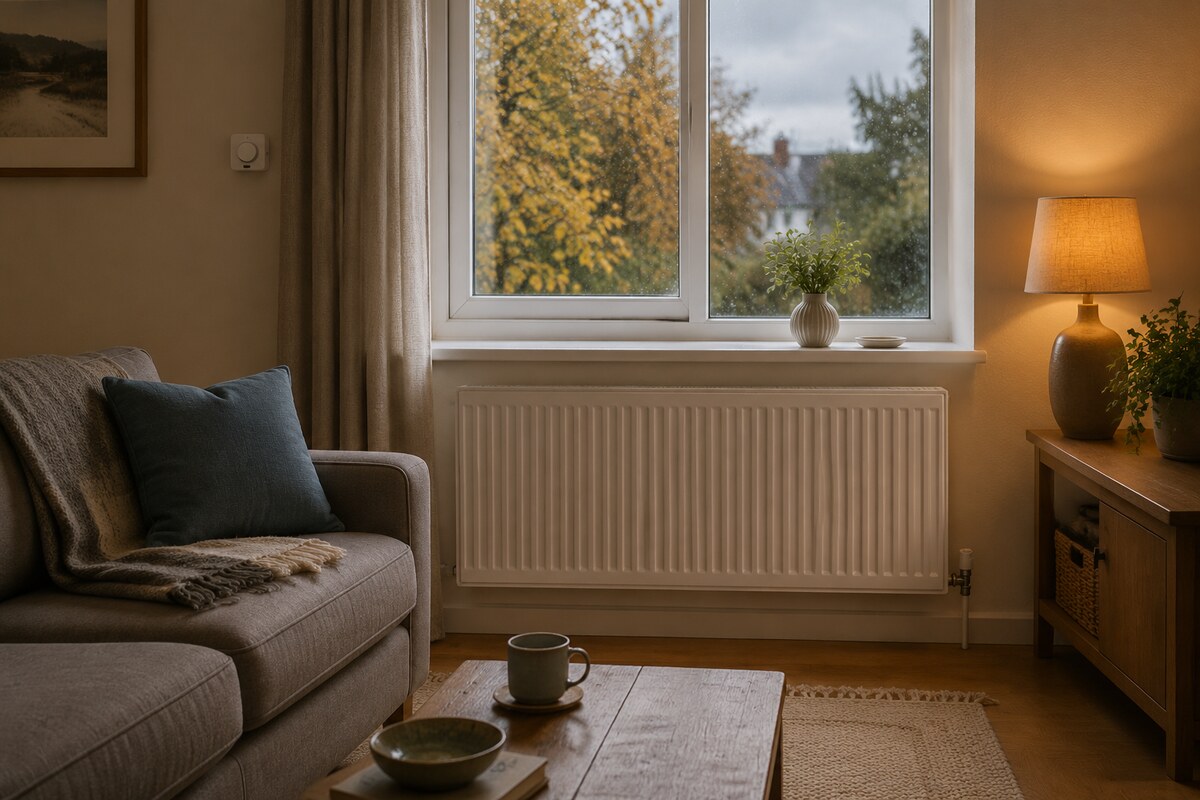
The first cool evening of autumn often starts the same household debate: is it genuinely cold enough for the heating, or should you wait another week? There is no official UK date when every boiler should be switched on. The better decision comes from indoor temperature, the people living in the home, the weather forecast and the way your heating system works.
Quick Answer: When Should You Turn the Heating On?
Turn the heating on when occupied rooms regularly fall below a comfortable and healthy temperature, rather than waiting for a particular date. For many households, a thermostat setting between 18°C and 21°C is a practical range. Homes occupied by older people, anyone with reduced mobility, or people with heart or lung conditions should generally keep the rooms they use most at 18°C or above during cold weather.
Healthy, active adults may feel comfortable slightly below 18°C, but comfort alone is not the only consideration. Persistent cold can contribute to condensation, make damp harder to manage and leave some residents more vulnerable. Check the actual room temperature with a reliable thermometer instead of judging only by how cold it feels outside.
What Temperature Should Your Home Be Before Using the Heating?
A room thermostat controls the air temperature around it. It does not set how hot the radiators become, and setting it unusually high will not make a cold house warm up faster. A sensible approach is to choose the lowest temperature that keeps the household comfortable, then let the thermostat switch the system off once that point is reached.
For many UK homes, 18°C to 21°C is a useful starting range. The right position within that range depends on health, age, activity, clothing, insulation and which room is being used. A draughty Victorian flat and a well-insulated new-build can feel different even when both thermostats show the same number.
Recommended Temperature for Living Rooms
Aim for at least 18°C in the rooms you use most, particularly when someone is older, less mobile or has a relevant health condition. Some households will prefer 19°C, 20°C or 21°C in the living room. Raising the setting above what feels comfortable usually wastes energy, so make changes one degree at a time and allow the room to settle.
Recommended Bedroom Temperature
Bedrooms are often comfortable at a slightly lower temperature than living areas. Healthy adults may not need an 18°C bedroom all night if they have suitable bedding and remain comfortable. Older people and those with existing health conditions may benefit from keeping the bedroom at least 18°C during very cold weather. Close bedroom windows overnight when it is cold, but ventilate the home at suitable times during the day.
Temperature Guidance for Babies
Babies need particular care because overheating can also be unsafe. NHS guidance commonly places the recommended sleeping-room range at 16°C to 20°C. Use an appropriate room thermometer and follow current safer-sleep advice rather than adding excessive bedding or placing a cot beside a radiator.
What Month Do Most UK Households Turn Their Heating On?
Many households begin using central heating during September or October, but the weather does not follow a fixed calendar. A mild October may require little heating, while a cold spell in September can make it sensible to use it earlier. Scotland, northern England and exposed rural areas can cool down sooner than sheltered homes in southern cities.
Instead of choosing a ceremonial “switch-on day”, watch the temperature inside your home for several mornings and evenings. If occupied rooms repeatedly fall below your chosen threshold, short timed heating periods are reasonable. This avoids both unnecessary use during a warm spell and the false economy of letting the home become deeply cold.
Should You Wait Until October to Turn the Heating On?
There is no prize for reaching October with the boiler untouched. Waiting can be harmless in a warm, dry and well-insulated home, but it can be uncomfortable or risky in a colder property. Vulnerable residents should not delay heating simply to follow a social-media challenge or a date used by another household.
The condition of the building matters too. When surfaces become very cold, moisture from cooking, showering and breathing is more likely to condense on windows and external walls. Heating alone will not solve damp, but steady warmth combined with ventilation can make moisture easier to control.
Is It Cheaper to Leave the Heating On All Day?
For a typical gas-boiler system, heating an empty home to the same temperature all day is usually unnecessary. A timer and thermostat can warm the home around the times people are present. The system then stops calling for heat when the set temperature is reached.
This does not mean switching the heating off for long periods is always best. A very cold, slow-heating home may need an earlier start, while vulnerable occupants may need a more stable temperature. The best schedule is the one that matches occupancy without allowing the home to become uncomfortably cold.
Timed Heating Versus Constant Heating
With a boiler, try scheduling heat before the household gets up and again before people return home. You can adjust the start time after observing how long the property takes to warm. Avoid pushing the thermostat higher to compensate for a late start; start the programme earlier instead.
Heat Pumps Work Differently
Heat pumps often work most efficiently at a lower, steadier temperature for longer periods. Repeatedly switching a heat pump off and demanding a rapid temperature rise can reduce comfort and efficiency. Follow the installer’s instructions and adjust the heating curve or schedule gradually rather than copying gas-boiler habits.
How Many Hours a Day Should the Heating Be On?
There is no universal number. Two hours may be enough in a compact insulated flat on a mild day, while a larger or poorly insulated home may require longer. Occupancy, outside temperature, building fabric and heating technology all change the answer.
Begin with the times comfort matters most: shortly before waking, during occupied daytime periods and in the evening. Review the room temperature rather than the number of hours shown on the timer. If rooms overshoot the thermostat setting or remain warm long after everyone leaves, shorten the programme. If they never reach a comfortable temperature, investigate draughts, radiator performance and boiler controls before simply extending every heating period.
How to Keep Your Home Warm Without Wasting Energy
Stop Draughts Around Doors and Windows
Use suitable draught-proofing strips, a letterbox cover or a door-bottom excluder where uncontrolled gaps allow cold air in. Do not block permanent vents or air bricks, since they may be needed for ventilation and appliance safety.
Use Curtains Without Blocking Radiators
Close curtains at dusk to reduce heat loss through windows, but keep fabric clear of radiators. Long curtains hanging over a radiator can send warm air behind the fabric instead of into the room. Move furniture a little away from heat sources so air can circulate.
Use Thermostatic Radiator Valves Properly
Thermostatic radiator valves, or TRVs, allow different rooms to be maintained at different levels. Keep frequently used rooms comfortable and use lower settings in spare rooms, rather than turning every radiator fully up. Do not use a TRV as a simple on-off switch unless the manufacturer recommends it.
Review the Boiler Flow Temperature Carefully
The boiler flow temperature controls the temperature of water sent to the radiators; it is separate from the room thermostat. Some combi boilers can operate more efficiently with a lower radiator flow temperature, although the home may warm more slowly. Conventional systems with a hot-water cylinder have additional safety considerations, so never copy a combi-boiler setting without checking the manual or speaking to a qualified engineer.
Heat the Rooms You Actually Use
Prioritise living spaces and bedrooms that are occupied. Keep internal doors closed where it helps retain heat, but maintain adequate ventilation and avoid letting unused areas become persistently damp. The goal is controlled zoning, not allowing part of the building to become cold and wet.
Signs It May Be Time to Turn the Heating On
- Occupied rooms repeatedly measure below your chosen comfort threshold.
- An older or medically vulnerable resident feels cold even when wearing suitable layers.
- Windows and external walls stay cold and condensation is becoming frequent.
- Bedding, clothes or soft furnishings begin to feel damp rather than simply cool.
- The forecast shows several colder days and the property takes a long time to warm.
A single chilly evening does not necessarily require a permanent winter schedule. Use a short heating period, check the indoor temperature and adjust as the weather develops.
How to Prevent Condensation and Mould in Autumn
Autumn brings cooler surfaces while everyday activities continue producing moisture. Open trickle vents where provided, use extractor fans during cooking and bathing, and ventilate briefly after high-moisture activities. Wipe persistent window condensation and avoid drying large amounts of laundry in an unventilated room.
Do not rely on opening windows all day while the heating runs. Short, purposeful ventilation is usually more practical than continuously losing heated air. If mould returns despite reasonable heating and ventilation, look for leaks, failed seals, blocked extraction or building defects. Renters should record the issue and inform the landlord or managing agent rather than repeatedly painting over it.
Prepare the Rest of Your Home for Autumn
Indoor heating is only one part of seasonal preparation. Lifeinism’s guide to garden upgrades to make this year includes ideas for making outdoor areas usable as evenings cool. Readers can also explore the site’s Homes section for practical household content and the wider Lifestyle section for everyday seasonal advice.
Frequently Asked Questions
What temperature should I turn the heating on at?
Use indoor temperature rather than a fixed date. For many people, a thermostat range of 18°C to 21°C balances comfort and energy use. Vulnerable residents may need rooms kept at least 18°C during cold weather.
Is 17°C too cold for a house?
Some healthy and active adults may feel comfortable at 17°C, but it may be too cold for older people, anyone with reduced mobility or people with certain health conditions. Consider damp and condensation as well as personal comfort.
Does turning the thermostat higher heat the house faster?
No. A higher setting usually makes the system heat for longer; it does not normally increase the rate at which the property warms.
Should I turn radiators off in unused rooms?
Lowering the TRV can reduce unnecessary heating, but allowing a room to become persistently cold and damp may create problems. Use a moderate setting and maintain ventilation where needed.
Should a heat pump be left on all day?
Heat pumps commonly work best with longer, steadier operation at lower temperatures. Follow the system design and installer guidance instead of using a boiler-style on-off schedule.
When should I turn the heating off in spring?
There is no fixed date. Reduce the schedule when indoor temperatures remain comfortable without heating, but keep it available for late cold spells.
Official Heating Guidance
For further detail on thermostat settings, heating schedules and the difference between boilers and heat pumps, see the Energy Saving Trust guidance on when to put the heating on. Guidance checked on 26 August 2026.
The Bottom Line
The right time to turn the heating on is when your home and household need it, not when a particular date appears on the calendar. Monitor the rooms you use, choose the lowest comfortable thermostat setting and programme the system around real occupancy. Give additional protection to older or vulnerable residents, and remember that boilers and heat pumps may need different operating patterns. A measured approach keeps the home comfortable without turning autumn heating into an all-or-nothing decision.