



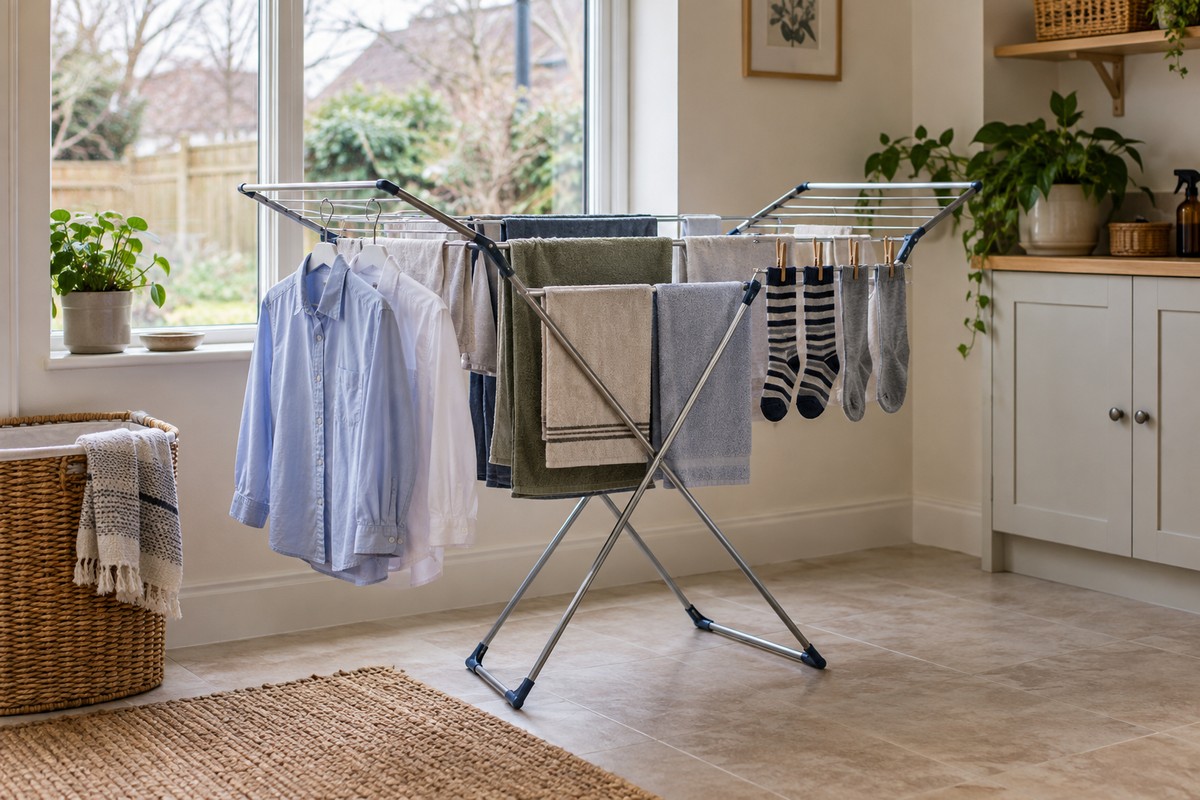
Quick Answer
To dry clothes indoors in winter, remove as much water as the fabric safely allows during the washing machine’s spin cycle, spread items across an airer and use a space with suitable ventilation. Avoid overcrowding the rack or blocking radiators and vents. If you use a heated airer or dehumidifier, follow its instructions and compare the electricity used over the complete drying session.
A drying rack can become an almost permanent piece of furniture during a British winter. Washing needs doing, outdoor conditions are unreliable and not every home has room for a tumble dryer.
The difficulty is getting clothes dry without leaving the room feeling damp or filling every available chair with laundry. Thick waistbands stay wet, towels take longer than expected and another wash may be ready before the previous one has dried.
A better routine starts before clothes reach the airer. How you wash them, where you hang them and how moisture leaves the room all affect the result.
Why Clothes Take Longer to Dry Indoors
Drying involves moisture leaving the fabric and entering the surrounding air. When clothes are packed closely together or the room has limited ventilation, that moisture is harder to remove.
Turning up the heating alone does not address the whole problem. The moisture still needs somewhere to go.
Energy Saving Trust identifies indoor clothes drying as an activity that increases the need for ventilation. Its guidance explains how ventilation helps remove moisture from the home. Energy Saving Trust
Before buying another appliance, look at your current arrangement. An overloaded rack in a poorly ventilated corner may benefit more from better spacing and a different location than from additional heat.
1. Start with the Washing Machine’s Spin Cycle
Clothes that leave the machine holding more water have more drying to do.
Check the care labels and choose an appropriate spin setting for the load. Towels and everyday cotton items may allow a different setting from delicate garments, wool or clothing that needs special care.
Do not automatically select the highest speed for everything. Follow the garment instructions and your washing machine’s guidance.
Avoid overloading the drum, too. Follow the machine’s capacity guidance for the programme you are using rather than assuming every cycle accepts the same quantity.
When the cycle finishes, take the washing out promptly. Shake out each item before hanging it to separate folds and make it easier to arrange on the airer.
2. Choose a Suitable Drying Space
A useful drying area has room around the rack and a way to manage moisture.
A utility room or a bathroom with suitable extraction may work, depending on the layout. In a smaller flat, your options may be limited, so focus on making the available space work as well as possible.
Check that the airer does not:
- Block an exit or regular walkway.
- Cover a radiator or ventilation opening.
- Sit tightly against a wall.
- Create a trip hazard near electrical leads.
Avoid placing wet fabric directly against furniture or walls. Leave enough space to move around the rack and rearrange items as they dry.
If drying laundry regularly leaves condensation on nearby windows, review the ventilation and the amount of washing being dried at once.
3. Leave Space Between Garments
It is easy to fill every rail when you want a whole load out of the machine. However, clothing pressed against other wet clothing can be slow to dry.
Spread items across the rack with gaps between them. Open out sleeves and trouser legs, and avoid folding thick garments into several layers.
Pay particular attention to:
- Hoodie pockets and hoods.
- Jeans waistbands.
- Thick socks.
- Towels folded over narrow rails.
- Seams and cuffs.
These areas can remain damp after the rest of the item feels dry.
If the rack is too small for the load, consider washing smaller batches. Buying a larger airer only helps if you have somewhere suitable to open it fully.
4. Manage Ventilation While Laundry Dries
Keeping every window shut may feel sensible in winter, but indoor moisture still needs to be removed.
Use the ventilation provided in your home as intended. Keep permanent vents clear and follow the instructions for extractor fans or mechanical ventilation systems.
Energy Saving Trust recommends improving ventilation and reducing moisture build-up when dealing with condensation. Drying outdoors when conditions allow can also reduce the moisture released inside. Energy Saving Trust
Read its guide to fixing damp and condensation for further advice.
There is no single window-opening routine that suits every property. Your home’s ventilation system, the weather and the room layout all matter. Avoid following blanket advice that ignores those differences.
For wider seasonal preparation, see Lifeinism’s autumn home maintenance checklist.
5. Use a Heated Airer According to Its Instructions
A heated airer adds warmth to the drying process, but it does not remove moisture from the home by itself.
Arrange clothes as the manufacturer recommends. Avoid piling several layers over the rails unless the instructions specifically allow that arrangement.
If the product has an approved cover, follow the guidance for using it. Do not improvise with bedding or other materials that could obstruct the appliance or create a hazard.
Check the instructions for placement, supervision and use around children or pets. Keep electrical connections away from wet fabric and water.
A heated airer can be useful when it suits your space and routine. Its running cost depends on its power consumption and how long it operates, so avoid assuming that every model is inexpensive to use.
6. Consider Whether a Dehumidifier Suits Your Room
A dehumidifier removes moisture from the air. Some models have a laundry setting, but performance depends on the appliance and the conditions in which it operates.
Before purchasing one, check:
- The recommended room size.
- The operating temperature range.
- Its electricity consumption.
- Noise levels.
- Water tank capacity and drainage options.
Position it according to the instructions, including the required clearance around the unit. Do not place dripping clothes over it.
Follow the manufacturer’s guidance about windows and doors during operation, while keeping permanent ventilation unobstructed.
A dehumidifier may help with laundry drying, but persistent damp still needs its underlying cause investigated. Government guidance notes that building defects, inadequate ventilation and heating problems can contribute to damp and mould; it should not simply be blamed on normal household activities. GOV.UK
7. Compare the Cost of the Complete Drying Session
When comparing electrical drying methods, the time needed matters alongside the appliance’s wattage.
Use this calculation:
Electricity cost = power in kilowatts × hours used × your electricity unit rate.
For example, a hypothetical 300-watt appliance running continuously for six hours uses 1.8 kWh. At an illustrative rate of 25p per kWh, that would cost 45p.
This is a calculation example, not a current tariff quote or a promise about a particular product. Appliances may cycle on and off, and your electricity rate may be different.
If you operate an airer and dehumidifier together, include both in the calculation. Compare the energy needed to get the washing dry rather than the cost of one hour alone.
8. Build a Routine Around Your Available Space
The best drying arrangement is one you can use consistently.
If you only have space for one rack, avoid starting another large wash before there is room to hang it. Separate bulky towels from smaller garments when that makes the load more manageable.
Check the laundry during drying. Move items that are touching, open out folded sections and remove garments that are fully dry.
Before putting anything away, check pockets, seams and waistbands. Damp clothing in a drawer can develop an unpleasant smell and leave you washing it again.
You can find further household ideas in Lifeinism’s Homes section and broader everyday advice in its Lifestyle coverage.
Common Indoor Drying Mistakes
Several habits can make winter laundry harder than it needs to be:
- Overcrowding the airer.
- Leaving washing in the machine after the cycle.
- Blocking vents to keep the room warmer.
- Ignoring thick areas that remain damp.
- Comparing appliances by hourly cost alone.
- Putting clothes away before they are completely dry.
If condensation or damp continues despite changes to your routine, investigate the property rather than repeatedly buying drying products. A leak, damaged building material or ventilation problem needs an appropriate solution.
Frequently Asked Questions
What is the best way to dry clothes indoors in winter?
Start with a suitable spin cycle, spread clothes out and manage ventilation. The most appropriate setup depends on your room, available space and the fabrics being dried.
Is a heated airer cheaper than a tumble dryer?
There is no universal answer. Compare each appliance’s electricity consumption over the full time needed to dry a comparable load. Product type, loading and drying time all affect the result.
Should I open a window when drying clothes indoors?
Moisture needs a way out, but the right approach depends on your home’s ventilation system. Keep permanent vents clear and follow any mechanical ventilation or appliance instructions.
Can a dehumidifier help dry laundry?
It can remove moisture from the surrounding air, and some models offer a laundry mode. Check the manufacturer’s guidance for room conditions, placement and operation.
Why do clothes smell after drying indoors?
Clothes that remain damp for a long time can develop an unpleasant smell. Check that they are well spaced and fully dry before storage, and clean your washing machine as instructed.
Can drying laundry indoors contribute to condensation?
Yes. Laundry releases moisture into the air as it dries. Adequate ventilation matters, although persistent damp or mould may also involve problems with the building itself. Energy Saving Trust